


Sheet Metal Roll Forming Machine: Engineering Principles, Materials, Process Control, and Industrial Applications
Author:[2026-08-25] | By Xiamen Tacon Forming Machinery Co., Ltd. Henry Liu sales@taconmachinery.com
A sheet metal roll forming machine converts continuous metal coil into a fixed or variable cross-section through successive bending stations rather than a single forming operation. For cold-formed steel, the practical material window depends on yield strength, thickness, profile geometry, bend radius, forming-pass design, and springback; high-strength grades can exceed 1,500 MPa tensile strength when the tooling and process are designed for them.
For manufacturers, the engineering objective is not simply maximum line speed. It is maintaining profile geometry, dimensional tolerance, surface condition, and production stability while controlling coil consumption, tooling wear, setup time, and downstream cutting or punching accuracy.

1. What Is a Sheet Metal Roll Forming Machine?
A sheet metal roll forming machine is a continuous cold-forming system. A metal strip enters the line as a flat coil and passes through multiple roller stations. Each station introduces a controlled amount of transverse bending until the final cross-section is reached.
The basic process is:
Coil loading → Decoiling → Guiding → Leveling → Punching/Forming → Roll forming → Cutting → Support/Stacking
Unlike press forming, where a component is normally formed in one or several discrete strokes, roll forming distributes deformation along the production line. This makes the process particularly suitable for long products with constant cross-sections.
Typical products include:
- C and Z purlins
- Light gauge steel framing members
- Metal studs and tracks
- Roofing sheets
- Wall panels
- Corrugated roofing
- Standing-seam profiles
- Door and window frames
- Ceiling channels
- Cable trays
- Solar mounting profiles
- Automotive structural sections
- Warehouse framing components
- Furniture and logistics profiles

TACON's current machine range covers construction, roofing, steel framing and other profile-production applications, with roller tooling and forming speed configurable according to the required product. (Xiamen Tacon Forming Machinery Co., Ltd.)
Typical Sheet Metal Roll Forming Parameters
| Engineering Variable | Typical Consideration |
|---|---|
| Material | Cold-rolled steel, galvanized steel, pre-painted steel, aluminum and selected high-strength alloys |
| Material thickness | Determined by product design and machine configuration |
| Yield strength | Must be specified before roller and drive-system design |
| Profile width | Based on finished cross-section |
| Forming method | Progressive cold roll forming |
| Drive system | Frequency motor or servo motor |
| Forming stations | Determined by profile geometry and material behavior |
| Punching | Hydraulic, servo or NC-controlled |
| Cutting | Hydraulic, flying or stationary cutting |
| Control | PLC, encoder and HMI |
| Output | Dependent on profile, material, punching and cutting requirements |
The machine should therefore be specified from the finished profile and raw material, not from a generic machine model.
2. Material Selection: Where Most Roll Forming Problems Start
A profile drawing tells the machine builder what shape to make. It does not tell the entire story.
Two steel coils with identical thickness can behave differently if their yield strength, tensile strength, coating, surface condition, or mechanical tolerances differ.
Common Materials for Sheet Metal Roll Forming
| Material | Typical Application | Engineering Consideration |
|---|---|---|
| Cold-rolled steel | Interior profiles, frames, brackets | Good surface quality and dimensional consistency |
| Galvanized steel | Purlins, studs, tracks, roofing | Zinc coating must be protected during forming |
| Pre-painted galvanized steel | Roofing and wall panels | Surface scratching must be controlled |
| Aluminum | Lightweight architectural profiles | Lower density but different springback behavior |
| High-strength steel | Automotive and structural components | Higher forming force and springback |
| Aluminum-zinc coated steel | Roofing and structural applications | Coating and forming compatibility must be considered |
For light steel framing, TACON lists galvanized and aluminum-zinc coils with G550-class material on several current machine configurations. Its single-specification light gauge steel machine, for example, is specified for 0.75–1.2 mm material and profile widths from 75 to 160 mm. (Xiamen Tacon Forming Machinery Co., Ltd.)
Why Yield Strength Matters
As yield strength increases, the material requires a higher bending moment to reach plastic deformation.
The simplified bending relationship is influenced by:
M≈σy×Z
where:
- M = bending moment
- σy = material yield stress
- Z = section modulus
This is not a complete roll-forming model, but it explains the engineering issue: increasing material strength can increase the required forming torque and can also increase elastic recovery after the material leaves the roller gap.
For high-strength steel, simply increasing motor power is not enough. The forming sequence, roller geometry, shaft stiffness, frame rigidity, and pass-to-pass deformation must also be checked.
Springback Must Be Designed Into the Tooling
When the strip leaves a roller station, part of the elastic deformation is recovered. This is commonly observed as springback.
A simplified relationship is:
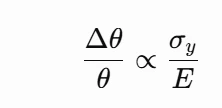
where E is Young's modulus.
The higher the yield strength relative to elastic modulus, the greater the springback tendency.
This is why a roller profile that performs correctly with mild steel cannot automatically be transferred to a high-strength steel grade.
Planning a sheet metal roll forming machine for a new steel grade?
Send TACON the material certificate together with the profile drawing. The useful information includes thickness, yield strength, tensile strength, coil width, coating specification and required profile tolerance.
For light-gauge applications, TACON also manufactures Light Gauge Steel Roll Forming Machines for galvanized and aluminum-zinc coils.
3. Roll Forming Process: From Coil to Finished Profile
A production line can be configured differently according to the product, but most sheet metal roll forming systems contain several core stages.
3.1 Decoiling
The decoiler supports the raw coil and releases the strip at a controlled rate.
Important parameters include:
- Coil weight
- Inner diameter
- Maximum outer diameter
- Coil width
- Coil tension
- Braking method
- Automatic or manual expansion
For higher production rates, the decoiler should be sized so that coil changes do not become the production bottleneck.
3.2 Entry Guiding
The entry guide establishes the strip's lateral position before forming.
This is a small component with a large effect on profile quality. If the strip enters the first forming stand off-center, the error can propagate through every subsequent station.
3.3 Leveling
Leveling removes coil set and reduces strip curvature.
The purpose is not merely to make the sheet visually flat. The material needs a stable initial condition before the first forming pass.
3.4 Punching
Punching can be performed before or after specific forming stages depending on the hole geometry.
For framing products, punching may include:
- Service holes
- Fastener holes
- Connection holes
- Slot holes
- Assembly openings
The relationship between punching position and finished profile must be established during machine design.
3.5 Progressive Roll Forming
This is the central operation.
Each roller station performs a limited amount of bending. A well-designed pass schedule avoids concentrating excessive deformation at one station.
The roller system must account for:
- Bend angle
- Material thickness
- Yield strength
- Flange width
- Lip geometry
- Forming radius
- Number of passes
- Line speed
- Springback
The roller material also matters. TACON's published machines commonly specify materials such as Cr12 or GCr15 for forming rollers, while main shafts may use 40Cr, depending on machine configuration.
3.6 Cutting
The finished profile is cut according to the programmed length.
The cutting method can be:
- Hydraulic post-cutting
- Hydraulic pre-cutting
- Flying cutting
The choice depends on the product and required production rate.
3.7 Product Support and Stacking
After cutting, the finished profile moves onto a support table or automated handling system.
For high-volume production, automatic stacking can reduce manual handling and keep the forming line running continuously.
4. Roller Tooling and Machine Rigidity
The forming rollers determine the geometry, but the machine frame and shafts determine how consistently that geometry is maintained under load.
Roller Design
Roller development normally starts from the final profile drawing and works backward through the forming passes.
Engineers determine:
- Final cross-section
- Material properties
- Bend radii
- Number of forming stations
- Intermediate profiles
- Roller dimensions
- Shaft loading
- Pass alignment
- Drive requirements
- Expected springback
The objective is controlled deformation rather than simply adding more roller stations.
Shaft Design
The main shafts transmit torque from the drive system to the rollers.
Insufficient shaft diameter or excessive deflection can produce:
- Uneven profile dimensions
- Roller misalignment
- Edge distortion
- Increased bearing loads
- Inconsistent forming
TACON's published light gauge steel machines use 40Cr main shafts and machined roller shafts, with shaft diameters specified according to the machine configuration.
Frame Rigidity
The frame must resist the forming load without excessive deformation.
A rigid frame helps keep roller centers aligned and limits changes in roller gap during production.
For a procurement team, this means machine weight alone should not be used as a quality indicator. Ask for the actual frame construction, shaft diameter, roller material, bearing arrangement, drive method and machining process.

5. Machine Automation and Process Control
Modern roll forming equipment is normally controlled by a PLC-based system.
A typical control architecture includes:
PLC → HMI → Encoder → Servo/Frequency Drive → Motor → Mechanical Transmission
The PLC manages production parameters such as:
- Target quantity
- Cutting length
- Punching position
- Forming speed
- Production count
- Machine alarms
- Sensor status
An encoder provides feedback on material movement so that the controller can calculate length.
Servo Drive vs. Frequency Motor
| Factor | Servo System | Frequency Motor |
|---|---|---|
| Position control | High | Moderate |
| Speed adjustment | High | High |
| Length control | Strong | Usually encoder-dependent |
| Dynamic response | Fast | Moderate |
| Cost | Higher | Lower |
| Typical use | Precision forming/punching | Standard continuous forming |
The correct choice depends on the profile and production requirements. A servo motor is not automatically the better choice for every roll forming application.
TACON currently offers both servo-driven and frequency-motor configurations across its machine range. (Xiamen Tacon Forming Machinery Co., Ltd.)
Need a machine that combines forming with punching and cutting?
6. Typical Products Made by Sheet Metal Roll Forming Machines
The range of applications is broad because roll forming is fundamentally a profile-production technology.
Construction and Building Materials
Typical products include:
- C purlins
- Z purlins
- C studs
- U tracks
- Ceiling channels
- Wall framing
- Roof panels
- Wall panels
- Corrugated sheets
- Standing-seam roofing
- Door frames
- Window frames
- Fire-door frames
- Guardrails
- Cable trays
- Solar mounting profiles

TACON's product range currently includes dedicated purlin, steel-frame, drywall and metal-roofing machine categories.
Logistics and Warehousing
Roll forming is suitable for:
- Warehouse supports
- Rack components
- Storage-frame members
- Guide rails
- Structural brackets
-
Electrical Equipment
- Typical profiles include:
- Cable trays
- Electrical enclosures
- Conduit supports
- Equipment frames
Automotive
High-strength roll forming is increasingly relevant to vehicle lightweighting.
Potential components include:
- Door beams
- Roof rails
- Seat rails
- Cross members
- Battery box frames
- Side-impact structures
- Chassis sections
These applications require much tighter control of material properties, profile geometry and dimensional tolerances than many standard building profiles.


Agriculture and Industrial Equipment
Other applications include:
- Agricultural channels
- Equipment frames
- Machine guards
- Structural brackets
- Feeding trough components
7. High-Strength Steel and Lightweight Structural Design
One major reason for the expansion of roll forming is the demand for lighter structures with higher load capacity.
High-strength steels allow engineers to reduce material thickness while maintaining required structural performance.
The supplied technical reference describes cold-formed applications reaching approximately 1,700 MPa and hot-roll-forming applications approaching 2,100 MPa. These values should not be treated as universal machine limits: the actual allowable material grade depends on the machine, tooling, forming sequence, thermal process and product specification.
Engineering Trade-Off
Higher strength can provide:
- Lower component mass
- Higher strength-to-weight ratio
- Reduced material consumption
- Smaller structural sections
But it can also increase:
- Springback
- Forming force
- Tooling stress
- Edge-wave risk
- Twist
- Dimensional sensitivity
Therefore, high-strength steel roll forming requires process development rather than simply upgrading an existing machine with a larger motor.
8. Custom Profile Development for OEM Production
For an OEM or private-label production project, the profile drawing should be treated as the starting engineering document.
A machine manufacturer should normally review:
| Input | Why It Matters |
|---|---|
| Profile drawing | Determines roller geometry |
| Material grade | Determines forming behavior |
| Thickness | Determines forming load |
| Yield strength | Influences springback |
| Coil width | Determines entry and tooling dimensions |
| Finished length | Determines cutting system |
| Hole pattern | Determines punching arrangement |
| Tolerance | Determines control and machining requirements |
| Production volume | Determines machine speed and automation |
| Product changeover | Determines tooling strategy |
A manufacturer that asks only for "profile width and thickness" does not yet have enough information to properly engineer a high-specification production line.
Engineering Development Sequence
Profile review → Material analysis → Pass design → Roller engineering → Shaft/frame calculation → Punching design → Drive selection → PLC programming → Trial production → Dimensional inspection
This sequence reduces the risk of discovering basic process problems after the machine has already been shipped.
9. Quality Control: What Procurement and QA Teams Should Inspect
Machine acceptance should be based on measurable results.
A factory acceptance test should ideally verify:
Dimensional Accuracy
Measure:
- Overall width
- Profile height
- Flange dimensions
- Lip dimensions
- Bend angles
- Hole position
- Cut length
Surface Quality
Inspect for:
- Scratches
- Roller marks
- Coating damage
- Edge cracking
- Burrs
- Surface deformation
Mechanical Performance
Check:
- Motor load
- Transmission operation
- Hydraulic pressure
- Bearing temperature
- Machine vibration
- Emergency-stop function
Production Stability
A useful acceptance test should not rely on one finished sample. The machine should demonstrate repeatable production over a defined run.
For international procurement, the acceptance protocol should be agreed before manufacturing begins.
10. Machine Integration Across Different Industries
The same roll forming principle can be configured for very different production environments.
For example:
Light steel construction:
Galvanized coil → punching → C/U forming → cutting → framing components
Metal roofing:
PPGI/galvanized coil → guiding → forming → hydraulic/flying cutting → finished roofing panel
Purlin production:
Steel coil → leveling → pre-punching → C/Z forming → post-cutting
Automotive production:
High-strength coil → precision guiding → multi-pass forming → integrated punching/cutting → inspection
TACON's current machine portfolio includes multi-specification steel frame equipment capable of C75–250 mm profiles, with published configurations using G550 material, 22 kW servo drives and 19 roller groups.
For larger structural profiles, its Sigma purlin equipment is listed for C100–400 mm, Z120–400 mm and Sigma180–400 mm profiles, with thickness ranges reaching 4.0 mm depending on the profile type.
11. What International Buyers Should Check Before Ordering
For an importer, distributor, or machinery brand, the machine quotation is only one part of the purchasing decision.
Before signing the purchase contract, request:
- General machine layout
- Profile drawings
- Roller drawings or tooling specifications
- Material compatibility statement
- Motor and electrical specifications
- PLC and HMI brand/model
- Hydraulic system specifications
- Cutting method
- Punching capacity
- Production-speed definition
- Dimensional tolerance
- Factory acceptance criteria
- Spare-parts list
- Installation requirements
- Electrical requirements
- Operator training plan
- Warranty terms
- Remote technical support arrangements
For distributors, also confirm whether the manufacturer can support:
- Customer-specific profile development
- Private-label/OEM production
- Spare-parts supply
- Remote troubleshooting
- Installation and commissioning
- Operator training
- Documentation in the target market
TACON states that its service covers machine design, manufacturing, shipping, installation and after-sales support, with engineers and production teams supporting international projects.
Buying a sheet metal roll forming machine for resale or factory installation?
Ask for the machine's engineering specification, not just a commercial quotation. TACON can work from profile drawings and material data to define the forming line, auxiliary equipment and production requirements.
For roofing applications, see the company's Metal Roofing Machine range.
12. Where Sheet Metal Roll Forming Technology Is Heading
The next stage of roll forming is not simply faster rollers.
The main development directions are:
Variable Profile Production
Servo-controlled forming stands can change roller positions during production, allowing a single production system to manufacture related variable cross-sections.
Faster Tool Change
Modular tooling reduces downtime when a factory needs to switch between different profile specifications.
Integrated Punching and Cutting
Combining multiple operations into one production line reduces intermediate handling and improves process synchronization.
Digital Production Data
PLC and industrial computer systems can record production quantity, machine status, alarms and operating parameters.
Automated Inspection
Vision systems and dimensional sensors can be integrated into advanced production lines to identify profile deviations during manufacturing.
Predictive Maintenance
Monitoring motor load, vibration, temperature and hydraulic conditions can provide early indications of equipment problems.
These technologies are particularly useful for manufacturers producing many profile specifications in relatively small batches, where setup time can have a significant effect on production cost.
13. Sheet Metal Roll Forming Machine: Engineering Summary
The commercial value of a sheet metal roll forming machine comes from process control, not from the number of roller stations or the motor rating printed on the specification sheet.
A reliable production system must match:
Material properties + profile geometry + forming-pass design + machine rigidity + drive system + punching/cutting requirements + dimensional tolerance + production volume
For standard building profiles, a relatively simple continuous line may be sufficient. For high-strength automotive sections, complex profiles or multi-specification production, the engineering requirements become considerably more demanding.
For international manufacturers, the best procurement process starts with a complete technical package: profile drawing, material certificate, thickness, target tolerance, production speed and annual output. The machine can then be engineered around measurable production requirements.
Xiamen Tacon Forming Machinery Co., Ltd. has operated since 2015 as a roll forming machine designer and manufacturer, providing machine design, manufacturing, shipping, installation and after-sales support for international customers.
FAQ
What information should I provide when ordering a sheet metal roll forming machine?
Provide the profile drawing, material grade, thickness, coil width, yield strength, finished length, hole pattern, dimensional tolerances and required production capacity. These inputs are sufficient for an initial engineering assessment.
How long does it take to manufacture a custom roll forming machine?
The production schedule depends on profile complexity, tooling development, machine configuration and testing requirements. The exact delivery period should be confirmed after the technical specification and purchase order are finalized.
Does TACON provide machine installation and after-sales support?
Yes. TACON provides shipping, installation guidance, operator training and after-sales technical support. Its stated service model covers machine design, manufacturing, shipping, installation and ongoing maintenance support.
Can one sheet metal roll forming machine produce multiple profiles?
Yes, if the machine is engineered for multi-profile production. The available approach may involve interchangeable tooling, adjustable forming stations or a multi-specification forming system. Profile compatibility must be confirmed during engineering.
Can roll forming machines process G550 high-strength steel?
Yes, suitable machines can be engineered for G550-class galvanized steel. The roller geometry, shaft and frame strength, forming-pass design, drive torque and springback must be checked against the actual material certificate.
What is the difference between a standard roll forming machine and a custom machine?
A standard machine is normally designed around a fixed profile and defined material range. A custom machine is engineered around the customer's profile, material properties, production speed, punching, cutting, tolerance and automation requirements.
Engineering Inquiry
If you are sourcing a sheet metal roll forming machine for a new production line, send TACON the technical information before requesting a final quotation:
- 1. Profile drawing
- 2. Material grade
- 3. Thickness range
- 4. Coil width
- 5. Yield/tensile strength
- 6. Finished length
- 7. Punching requirements
- 8. Target production speed
- 9. Annual or monthly output
- 10. Required automation level
Xiamen Tacon Forming Machinery Co., Ltd. can then assess the forming process, tooling, drive system, punching/cutting configuration and production-line layout.
For OEM manufacturers, machinery distributors, building-material producers, property developers and private-label buyers, the engineering specification should come before the machine quotation.
Request a technical review for your sheet metal roll forming project